Tuesday, March 8, 2016

Blog Post # 8 : Whale Rider (2002) : Paikea - Rider of Whales

Whale Rider is a 2002 New Zealand-German family drama film directed by Niki Caro, based on the novel of the same name by Witi Ihimaera. The film was a co-production between New Zealand and Germany. It was shot on location in Whangara, the setting of the novel. The film received critical acclaim upon its release. At age 13, Keisha Castle-Hughes (the main character) became the youngest nominee for the Academy Award for Best Actress (the film's only Oscar nomination) before she was surpassed by Quvenzhané Wallis, at age 9, for Beasts of the Southern Wild less than a decade later. The movie was rated 7.6/10 on IMDB and 90% on Rotten Tomatoes.


"People Love Whale Rider"

Plot :

A newborn’s cry is normally a moment of utmost joy. But it wasn’t so when Pai was brought into the world. Her entrance was simultaneous with the death of her mother and twin brother. And in one fell swoop, the line of chieftains descended from Paikea was shattered. (Paikea was the man who founded the Maori race by riding a whale across the ocean to what is now New Zealand.) Pai’s grandfather, Koro, is devastated. His heartbroken son, Porourangi, a direct descendant of Paikea, has left his land, haunted by memories of his wife and son. And without any more pure (male) Maori offspring, there’s no chance for their race to continue. So, every time Koro sees Pai (boisterous, intelligent, loving, lonely, and abandoned Pai), he sees the end of his people. Because though Pai is directly descended from Paikea, she is a girl and Koro knows that a woman could never be the leader of the Maori people. While her grandfather, Koro, later forms an affectionate bond with his granddaughter, carrying her to school every day on his bicycle, he also condemns her and blames her for conflicts happening within the tribe. At one point Paikea decides to leave with her father because her grandfather is mistreating her. She finds that she cannot bear to leave the sea as the whale seems to be calling her back. Pai tells her father to turn the car back and returns home. Pai's father refuses to assume traditional leadership; instead he moves to Germany to pursue a career as an artist. Pai herself is interested in the leadership, learning traditional songs and dances, but is given little encouragement by her grandfather. Pai feels that she can become the leader, although there's no precedent for a woman to do so, and is determined to succeed. Koro leads a cultural school for the village boys, hoping to find a new leader. He teaches the boys to use a taiaha (fighting stick). This is traditionally reserved for males. However, Nanny tells Pai that her second son, Pai's uncle, had won a taiaha tournament in his youth while he was still slim, so Pai secretly learns from him. She also secretly follows Koro's lessons. One of the students, Hemi, is also sympathetic towards her. Koro is enraged when he finds out, particularly when she wins her taiaha fight against Hemi. Koro's relationship with Pai erodes further when none of the boys succeed at the traditional task of recovering the rei puta (whale tooth) that he threw into the ocean – this mission would prove one of them worthy of becoming leader. With the loss of the rei puta, Koro in despair calls out the Ancient ones, the whales. In an attempt to help, Pai also calls out to them and they hear her call. One day Pai finds the rei puta while swimming, signifying that she is the rightful leader. Pai, in an attempt to bridge the rift that has formed, invites Koro to be her guest of honour at a concert of Māori chants that her school is putting on. Unknown to all, she had won an inter-school speech contest with a touching dedication to Koro and the traditions of the village. However, Koro was late, and as he was walking to the school, he notices that numerous right whales are beached near Pai's home. The entire village attempts to coax and drag them back into the water, but all efforts prove unsuccessful; even a tractor does not help. Koro sees it as a sign of his failure and despairs further. He admonishes Pai against touching the largest whale because "she has done enough damage" with her presumption. Also, the largest whale traditionally belongs to the legendary Paikea. When Koro walks away Pai climbs onto the back of the largest whale at the location and coaxes it to re-enter the ocean. The whale leads the entire pod back into the sea; Pai submerges completely underwater, and the spectators had wondered if she'd drowned, but were relieved when she came back above sea level. When she goes out to sea, Nanny shows Koro the whale tooth which Pai had previously recovered. When Pai is found and brought to the hospital, Koro declares her the leader and asks her forgiveness. The film ends with Pai's father, grandparents, and uncle coming together to celebrate her status as the new leader, as the finished waka (canoe) is hauled into the sea for its maiden voyage. In voiceover, Pai declares, "My name is Paikea Apirana, and I come from a long line of chiefs stretching all the way back to the Whale Rider. I'm not a prophet, but I know that our people will keep going forward, all together, with all of our strength."

Analysis & Reflection :
In the film, the need for gracious love in family relationships is emphasized by the lack of it in Pai’s life. this can be seen when Koro is relentlessly harsh toward her, indirectly blaming her for the fracture in the Maori lineage throughout the entire movie, except for the end. However, it is not that he (Koro) hates Pai, but far from it, as he sticks up for her when her schoolmates tease her and regularly pedals her across the lush New Zealand countryside on his bike. That being said, a desperate disappointment lurks at the core of their interactions, because while Koro provides for his granddaughter’s basic needs, he has emotionally abandoned her. Furthermore, his pursuit of a new heir to Paikea (the original ancestor) nearly destroys his household. This is seen when his obsession with tradition causes his wife to consider divorce and Pai’s spirit falters under the old man’s continual disapproval (she sobs uncontrollably after Koro doesn’t show up for a school performance). When his search for an heir fails, he retreats into his bedroom and silently wastes his days on his bed. The message from this film is clear here : personal ambition must never trump the preservation of one’s family. Family is important in one's life, as family systems are built on the foundation of love, attachment, loyalty, and trust, which in turn fulfills safety and status needs, according to the psychology of family. Although, through all of Koro's harsh treatments towards her, at least Pai has her grandmother, who cares for her emotionally as well as physically.
:'('''
According to the film's director, Niki Caro, “Whale Rider is essentially about leadership and the fact that leadership presents itself in the form of a young girl”, which would portray themes of feminism in the film. Such feminist sentiments are indeed present in the movie, but are not forceful by any means, for example, Pai’s claim to the position of Maori chief has less to do with female empowerment than being recognized for who she is by her grandfather (and also be subsequently loved). Still, care should be taken to compare and contrast the way the movie handles the role of women with that established in Scripture, and this film has done it beautifully. 
If only you were male...
Conclusion :
With all that has been said, Whale Rider has next to no plot. Its fixation on myths indigenous to New Zealand lends a bizarre, ethereal other-worldliness, and almost all characters speak in Maori almost as much as they do in English. With such a unique premise, why is the slow, sleepy Whale Rider lauded by critics and audiences alike? In my opinion, most of that praise is doubtlessly due to the noteworthy performance of newcomer actress Keisha Castle-Hughes, who gave a compelling performance as Pai, who bore the oddly interconnected burdens of being simultaneously spurned by her relatives and fiercely embraced in love. Yet, perhaps the film is so absorbing because we understand being unable to love those we ought as we ought; we curse and yet our bent hearts still care, and this stokes our empathy not only for those around us, but for the whole of broken humanity as well.
You don't choose your family, they are God's gift to you, as you are to them :)
As mentioned before, feministic themes are present in the movie, and this movie teaches us that women have a place in society, and that place is not beneath them in any way, but rather beside them; of equal status and opportunities, and what better way to write a blog post about this than International Women's Day (8th March).
That's right. You can do it, I can do it too.
Rating : 7/10 
The original whale rider. The pioneer.


Tuesday, March 1, 2016

Blog Post # 7 : Forget Paris (1995) : Love Conquers All

Forget Paris is a 1995 romantic comedy film produced, directed, co-written by, and also starring Billy Crystal as a NBA referee and Debra Winger as an independent working woman whose lives are interrupted by love and marriage. The film received mixed reviews, mostly positive but some negative, and was rated 6.4/10 on IMDB and a balanced 50% on Rotten Tomatoes.
A Comedy about Love....After Marriage

Plot :
At a restaurant in New York City, Andy prepares to introduce his friends to his fiancée, Liz. As the couple waits for the rest of the party to arrive, Andy begins telling Liz the strange story of how his friends Mickey and Ellen came to know each other and fall in love. As each of Andy's friends arrive, more of the story is unfolded to Liz. Mickey Gordon is a National Basketball Association (NBA) referee who honors his recently-deceased father's wishes by burying him at the resting site of his World War II Army platoon in France, of which he was the sole survivor. However, Mickey's plans are delayed for several days after the airline misplaces the casket. Ellen Andrews, an airline employee from Wichita working in Paris, assists Mickey in locating and retrieving the lost casket. She surprises Mickey by attending the burial in the French countryside so he won't be alone. Mickey rides back to Paris with Ellen, and the two get to know each other better along the way. Mickey spontaneously decides to delay his return trip to the United States to spend more time with Ellen. The two fall in love in the streets of Paris, but after a week together, Mickey is forced to return to the United States for the beginning of the NBA season. Constantly thinking about his time in Paris, Mickey's loneliness leads him to lose his temper during a nationally-televised game. As a result of the tirade, Mickey is suspended by the NBA for a week. During the suspension, he returns to Paris to see Ellen. Soon after he arrives, Mickey learns Ellen is married but separated, and is unsure if she and her husband will get back together. Brokenhearted, Mickey returns to America. While Mickey is in Charlotte to referee a game, Ellen arrives unexpectedly to meet him and reveals that she has gotten a divorce. Having quit her job in France, Ellen marries Mickey. After a honeymoon period spent on the road during the NBA season, the couple settles in the San Fernando Valley outside Mickey's hometown of Los Angeles. When the next basketball season begins, Ellen takes an entry-level customer service job with American Airlines, while Mickey travels with the NBA. Hating her new job and only seeing Mickey a few days each month, Ellen becomes lonely and depressed. She asks Mickey to quit his job; he compromises by taking a one-year leave of absence and briefly working as a car salesman. However, Ellen quickly gets promoted and climbs the corporate ladder, leaving Mickey at home to tend to her aging and irritating father, Arthur. Dealing with common marital issues, including the incongruity of their professional lives and the inability to conceive a child, the two begin to emotionally drift apart. Mickey, unhappy at home with Arthur, decides to return early to the NBA. He comes home from a road trip to find Ellen gone. Before he can read her note, she arrives and explains that she had simply returned to Kansas to deliver Arthur to her siblings so she and Mickey can finally be alone and attempt to repair their marriage. Shortly thereafter, Ellen approaches Mickey and says she has been offered a transfer to Dallas. Mickey refuses to move away from California, so Ellen takes the airline's other offer of a transfer to Paris. Now separated, the two are seemingly content in their original arrangements: Mickey traveling with the NBA, and Ellen working for an airline in Paris. However, it is obvious to all of their friends that they miss each other's company. At the restaurant, Andy's friends have caught Liz up to date on the entire story as they know it, with the latest development coming four months prior. A basketball fan enters the restaurant and informs the group of an odd occurrence during the traditional singing of "The Star-Spangled Banner" prior to that night's New York Knicks's game at Madison Square Garden. Mickey decides to go AWOL from his job and immediately return to Paris to find Ellen. Before he can make it across the basketball court, however, he spots Ellen in the arena. The two meet and reconcile at mid-court, and as the arena lights come on after the anthem, the entire crowd sees the two kissing. As the man finishes telling the story, Mickey and Ellen arrive at the restaurant together (surprising the rest of the party, who still believed them to be separated) and begin to re-tell Liz the entire story of their relationship.

Analysis & Reflection :
Everytime I watch a romantic movie, two thoughts enter my head; whether it would end well for them, and whether I am watching a 'chick flick', meaning a sappy romance film filled with cliches that 100% ends with a happy ending. However, "Forget Paris" was a different kind of romantic film; one that showed the hardships that people faced in relationships, and that love isn't always fun and flowers. In a film about romance, it is only natural that the movie be centred around the theme of love, and it is the very concept of love that is questionable in this movie. Love is indeed an interesting phenomenon, and according to Sternberg's triangular theory of love, intimacy, passion, and commitment are crucial in determining a type of love in a relationship. Based on the theory, it would seem that Ellen and Mickey's marriage is based on the concept of consummate love. Although, Mickey and Ellen struggle a lot with intimacy and commitment in their relationship, for example, the travelling arrangements for the couple. At first, Mickey is the one who travels a lot, leaving Ellen at home, miserable and lonely. After Mickey compromises and gets a new job, he in turn starts to feel miserable while Ellen is at work, and Mickey has to stay home with his very old father-in-law. The fact that they are always apart, busy with their own lives, and as pointed out by Mickey in the movie, they have not had sex for a very long time, which indicates a lack of intimacy in the relationship. This means that although they feel love for each other, and the intimacy is high between them, they are unable to act on it, which gradually reduces the level of intimacy between them (an example of "want but not able to do").
Image result for forget paris
Toyotaaa...you asked for ittt, you gott itt
Image result for forget paris
One of those bird-stuck-to-your-head kinda days

As for their commitment levels, it is not to say that Mickey and Ellen are not committed to the marriage; they are, but in doing so, they have had to let go of their dreams, something which had came back to haunt them and they eventually succumbed to choosing their dreams over the marriage. This means that Mickey and Ellen both were mentally committed to the relationship and marriage, but due to their pursuit for their dreams, the physical commitment to the relationship was very little, in terms of intimacy and their priorities in life (in which career took precedence over marriage). Examples include Mickey getting his job back and Ellen choosing to go back to Paris after Mickey refuses to go to Dallas with her. Personally, I felt that their decisions were right. Love hurts, but if one's dreams are more important than the love of your life, then those dreams should be pursued, as the consequences may be unhealthy for the relationship or marriage, for example, blaming one's soulmate as the cause of unfulfilled dreams, which could lead to an impending breakup or divorce in the future, which should by all means be prevented.
I love you....but I love my job too :/

The week in Paris, however, was completely different, and started as infatuation. They had a week full of sightseeing, dancing, laughing, and singing, in which they were constantly by each other's side, and Mickey and Ellen then were enveloped solely in passion, with no commitments and feelings of intimacy. However, the relationship then turned into romantic love when Mickey spent the night at Ellen's home, where it was implied that they had coitus. This became the basis for their marriage, and yes, naivety or a rash decision can lead to disasters, hence the reason why some couples take some time to know their significant other first before deciding on marriage, as marriage is no trivial matter.
You see that? He's right, ya know.

Conclusion :


All relationships are a give and take, and it takes two parties to make a relationship work [like a balance (weighing scale)]. Marriage and love is not something simple, as it takes commitment, passion, the endless acceptance of each other's flaws, and honorable fidelity to achieve a satisfying and functional relationship. Love is also about going through not just the ups, but also the downs in life with one's loved ones, as seen in the film, depicted by Mickey and Ellen's one week 'honeymoon' period in Paris, only to be greeted by the harsh reality of marriage for the rest of their lives, in which is depicted the essence of the film that defines the reason for the film's name, "Forget Paris".


Their bodies form a heart shape :')
Rating : 8.7/10 
Image result for forget paris
FINALLY DONE

Tuesday, February 23, 2016

Blog Post # 6 : Strictly Ballroom (1992) : A Comedic Version of "Step-Up"

Strictly Ballroom is a 1992 Australian romantic comedy film directed and co-written by Baz Luhrmann. The film, which was Luhrmann's first, is the first in his The Red Curtain Trilogy of theatre-motif-related films and was followed by Romeo + Juliet and Moulin Rouge!. This widely acclaimed movie was nominated for one Golden Globe award and won 19 other awards in Australia. The movie was rated 7.3/10 on IMDB and a whopping 95% on Rotten Tomatoes.  

The Musical
Plot :
Strictly Ballroom tells the story of an Australian ballroom dancer, Scott Hastings, and his struggle to establish his personal style of dance on his way to win the Pan-Pacific Grand Prix Dancing Championship. Scott's steps are not strictly ballroom. Scott comes from a family with a history of ballroom dancing and has been training since childhood. Scott's mother Shirley teaches ballroom dancing, and his father Doug meekly handles maintenance chores at the dance studio. After losing a competition to a rival pair, because Scott started dancing his own steps, his dancing partner Liz Holt leaves him for the rival male, Ken Railings, after his partner Pam Short breaks both her legs in a car accident. With only weeks before the next Pan-Pacific competition, try-outs begin to find Scott a new dance partner but, unknown to his parents, Scott secretly begins rehearsing with frumpy outsider Fran, a beginner dancer at his parents' studio. Scott is initially skeptical, but when Fran introduces 'pasodoble' steps into their routine, Scott realizes her potential. He walks her home one night and finds her Spanish family living in a tiny home next to the railway tracks, where Fran's family show him the authentic Spanish pasodoble style. As their rehearsals progress, Fran grows more attractive and self-confident. A few days before the Pan-Pacifics, Fran's family decide they are ready to dance pasodoble. Scott and Fran are walking together and talking until they kiss. When Scott returns to the dance studio, he finds Barry Fife, the conniving president of the Australian Dancing Federation who proceeds to tell him "the truth" about his parents, Doug and Shirley — they too were ballroom dancing champions, especially his father, until they lost the Pan-Pacific Grand Prix because of Doug's self-obsession and unorthodox dance steps. According to Barry losing the contest left Doug a broken man, sustained by the hope that one day his son would learn from his father's mistakes and win the Grand Prix. Scott is convinced to dance with Liz instead of Fran so he can win "for his father's sake". However, this is later revealed as a lie, as a part of Barry's plot to fix the competition so Scott and Liz will lose. Meanwhile, Scott starts training with Liz, while a heart-broken Fran goes back to the beginners' class. At the Pan-Pacific Grand Prix, Scott's friend Wayne Burns and his partner Vanessa Cronin overhear Fife talking to Ken and his partner Tina Sparkle saying that they will win no matter what. Wayne tells Les Kendall (Scott's coach, Doug and Shirley's friend and one of the judges) who then confronts Fife about it. Meanwhile, Doug finally manages to pull Scott aside and tells him the real story — Doug never danced at the competition because Barry convinced Shirley the only way to win was to dance the conventional steps with Les, but Shirley and Les lost the contest anyway. After hearing his father's revelation, Scott finds Fran and asks her to dance with him. Fife tries to cut the music and stop them from dancing but Scott's sister Kylie and her partner Luke (from the children's division) interfere until Fife's loyal companion Charm Leachman cuts the music. Fife then disqualifies them, but Doug, along with Fran's family, claps out a beat which encourages Scott and Fran to "dance from the heart", drawing cheers from the crowd and tears of joy from Doug. Finally, Liz, having had a change of heart, turns on Barry and Leachman and restores the music. The couple's spirited dancing brings down the house. Doug asks Shirley to dance with him and the whole audience joins them on the floor. As the performance finishes, Scott and Fran kiss, the competition forgotten, as it was never about winning or losing.

Analysis & Reflection :
"A life lived in fear is a life half-lived". Fran's family motto indicates the main theme in the movie, which is fear. In the movie, many of the characters have encountered fear in their lives, for example, Scott's mother, Shirley. Shirley was afraid of losing the Pan Pacific Grand Prix in her time by dancing with her husband, Doug, who insisted they dance unconventional moves, so she ended up dancing with Les; a decision that was influenced by Barry Fife. They lost the competition anyway, and was therefore very scared when Scott wanted to dance unconventional moves as well. The conniving villain in this movie, Barry Fife, despite his manipulative and intimidating exterior, also lived in constant fear. He was a popular dancing coach and teacher in the movie and when Doug and Scott both chose to dance unconventional moves, he (Barry) tried to stop it, going so far as to try to disqualify Scott from dancing his unconventional moves. This was because he intended to maintain the status quo and only taught strictly ballroom techniques of dancing. As he mentioned in the movie, if people had it in their heads that they could create their own dance moves like Scott did, there would be no more dance teachers around, and that would put him out of a job, or at the very least lower his status quo and significance in society.
Image result for strictly ballroom
OMG. Out of a job?
In addition to that, other recurring themes in this movie from a psychological perspective include conformity, compliance, and obedience. Firstly, conformity was seen in the form of every other dancer at the competition, for example, Liz Holt and Wayne Burns. They all were appalled at the idea of Scott trying new dance moves, and conformed to the general consensus in their dancing community that dancing ballroom only was the only acceptable option.
Image result for strictly ballroom
Yuck to those new dance moves.
Secondly, compliance was seen in the form of a deal made between Wayne and Barry Fife, where Wayne was to try and convince Scott to dance strictly ballroom and Barry was to help show Wayne a hidden technique for his bogo pogo dance. Liz was also portrayed as being compliant in the first competition at the start of the movie, following Scott's lead, where they lost the competition due to Scott dancing his unconventional moves.
Disclaimer : This is not about rape
Lastly, obedience was seen in the form of all dancers, following the rules of the competitions set forth by Barry Fife, the president of the Australian Dancing Federation, with the exception of Scott and Fran. On the contrary, the latter two are more involved with disobedience, with Fran sneaking out and going to the competition anyway, going against her father's orders, and Scott rebelling throughout the whole movie, with his dream of dancing his new moves.
Image result for strictly ballroom no
Warning : Rebelling can do this to you
Beginner Dancer

Image result for strictly ballroom tumblr
They will never find us up here
Conclusion :
This movie is a good mix of comedy, emotional moments, and good looking individuals, so I would highly recommend watching it. The whole concept of going against social norms to achieve one's dreams might be a cliche' in movies in this day and age, but back then when this movie was released, it was a unique piece of animation. The movie would also really appeal to those who love dance, romantic flicks, or have had experiences in their teenage years rebelling against parents and society on the path of achieving their own dreams. "A life lived in fear is a life half-lived" indeed. This movie teaches us that we only have one life to live, so live it well :)
Image result for strictly ballroom tumblr
YOLOOOOO
Rating : 7/10     
The best moves are the ones you make on your own

Tuesday, February 16, 2016

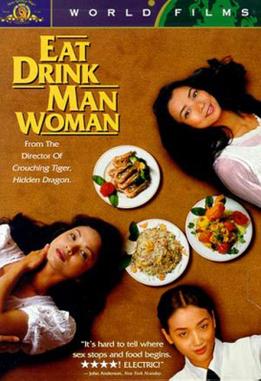
Blog Post # 5 : Eat Drink Man Woman (1994) : Review

This film, released worldwide in the year 1994, was the first ever box office success of famous Taiwanese director Ang Lee. The film received the Asia Pacific Film Festival Award for Best Film in 1994, and in 1995 it received an Academy Award Nomination for Best Foreign Language Film. IMDB rates this film 7.8/10 and Rotten Tomatoes a whopping 93%.
Movie Review Blog Caption
Plot :
The setting is 1990s contemporary Taipei, Taiwan. Mr. Chu, a widower who is a master Chinese chef, has three unmarried daughters, each of whom challenges any narrow definition of traditional Chinese culture. The oldest daughter, Chu Jia-Jen, is a school teacher nursing a broken heart who converted to Christianity. Chu Jia-Chien , the middle daughter, is a fiercely independent airline executive who carries her father's culinary legacy, but never got to pursue that passion. Lastly, Chu Jia-Ning, the youngest, is a college student who meets her friend's on-again off-again ex-boyfriend and starts a relationship with him. Each Sunday Mr. Chu makes a glorious banquet for his daughters, but the dinner table is also the family forum, or perhaps “torture chamber,” to which each daughter brings “announcements” as they negotiate the transition from the traditional “father knows best” style to a new tradition which encompasses old values in new forms.

Analysis & Reflection :
First of all, the name of the movie, "eat drink man woman" as explained in a scene in the movie by Mr Chu, referred to the natural basic desires of man, in this context 'eat' referring to meat, and 'drink' to wine, while 'man woman' referred to sexual desires. All these could be classified under 'physiological or biological needs, according to Maslow's hierarchy of needs. It is the basic form of needs humans have in order to survive, and should be viewed as a natural occurrence, hence the meaning of the movie's title. 
Image result for eat drink man woman
Sexual desires are a part of life
In this movie, there were many key points that set it apart from the rest, for example, the father, Mr. Chu, started off as a typical Chinese man and father. But, as the story developed he was seen to be not as traditional as the stereotypical traditional Chinese father in classic Chinese movies. This was seen with how he faced with his first and third daughters' relationship when Jia-Jen and Jia-Ning blurted out the news from nowhere during their usual Sunday banquet dinner. After they confessed to having a baby and being already married, he calmly wished them well and saw them off to their new life with their new partners. A typical Chinese father would have forbidden their daughters from having a relationship with another unknown person. Mr. Chu's reaction to the situation was portrayed as silently accepting and him giving his blessings to them out of love.
Image result for eat drink man woman
A baby? Is it a son?
The Chinese would usually express themselves through body language, facial emotions, and the action of concern to each other which makes us behavioral interdependence instead of affective interdependence. Therefore, we usually take for granted for what has been there without much interest until one expresses what was really inside their hearts. One of these was shown by the interaction with the first and second daughter while washing plates. Biologically a male, it would be harder for a man to read the emotions of a woman, but Mr Chu manages to understand his daughters feelings and emotions towards his food and also does laundry for his daughters, which in Asian culture, is rare.
The things I do for love :')
To me, the most heartwarming father to daughter relationship theme in the film was how he wakes every daughter up before and after his morning jogs. I believe after seeing all his daughters settled down and having their own family and goals, he, himself decided to pursue his own future by announcing his unexpected relationship with Jin-Rong. Knowing about the Holland project (Jia-Chien's Amsterdam promotion), he made up his mind to sell the house and led a new life where I believe it was to make Jia-Chien less obliged to him and strive for a better future.
Image result for eat drink man woman
Go. Live your life.
All in all, Bronfenbrenner's ecological theory would explain the heavy aspect of culture in this film, in terms of the difference in culture contrasting to the stereotypical norm. The ecological theory explains that each individual is affected by their 'systems' as they develop into adults, and as mentioned before above, Mr Chu is a man who goes against the stereotypical norms of the Chinese culture; hence, there is reason to believe that Mr Chu raised his three daughters with his values, and that formed their current personality as well. 

Conclusion :
This movie is a heartwarming one, consisting of various themes like filial piety, the value of family, love and sex, and the beauty of food. Thus, watching this movie when one is terribly hungry is not advised. :)
YUUUUUUUUUUMMMMMMMMMMMMMM
Rating : 7.5/10 

Monday, February 8, 2016

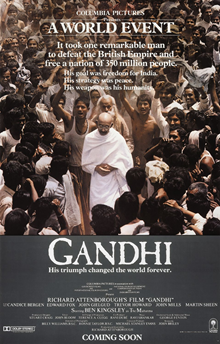
Blog Post # 4 : Gandhi (1982) : The Legend

This is the largely acclaimed biographical film of the legendary Indian leader, Mohandas Karamchand Gandhi, also known as Mahatma Gandhi. This 3-hour long movie received 11 Oscar nominations and won a staggering 8 Oscars, cementing it's place in history as one of the best films of all time. It is rated 8.1/10 on IMDB and 88% on Rotten Tomatoes.
That feeling when a nation rallies behind you
Plot :
The film begins on the day of Gandhi's assassination on 30 January 1948, where after an evening prayer, an elderly Gandhi is helped out for his evening walk to meet a large number of greeters and admirers. One of these visitors, Nathuram Godse, shoots him point blank in the chest. Gandhi exclaims, "Oh, God!" and then falls dead. The film then cuts to a huge procession at his funeral, which is attended by dignitaries from around the world. The movie then proceeds to a flash back of his entire life, starting with the faithful incident that started it all in 1893, where the 23-year-old Gandhi is thrown off a South African train for being an Indian sitting in a first-class compartment despite having a first-class ticket. Realising the laws are biased against Indians, he then decides to start a non-violent protest campaign for the rights of all Indians in South Africa. After numerous arrests and unwelcome international attention, the government finally relents by recognising some rights for Indians. After this victory, Gandhi is invited back to India, where he is now considered something of a national hero. He is urged to take up the fight for India's independence from the British Empire. Gandhi agrees, and mounts a non-violent non-cooperation campaign of unprecedented scale, coordinating millions of Indians nationwide. There are some setbacks, such as violence against the protesters and Gandhi's occasional imprisonment. Nevertheless, the campaign generates great attention, and Britain faces intense public pressure. After World War II, Britain finally grants Indian independence. Indians celebrate this victory, but their troubles are far from over. The country is subsequently divided by religion. It is decided that the northwest area and the eastern part of India (current-day Bangladesh), both places where Muslims are in the majority, will become a new country called Pakistan. It is hoped that by encouraging the Muslims to live in a separate country, violence will abate. Gandhi is opposed to the idea, and is even willing to allow Muhammad Ali Jinnah to become the first prime minister of India, but the Partition of India is carried out nevertheless. Religious tensions between Hindus and Muslims erupt into nationwide violence. Horrified, Gandhi declares a hunger strike, saying he will not eat until the fighting stops. The fighting does stop eventually, but Gandhi is now too weak. Gandhi spends his last days trying to bring about peace between both nations. He thereby angers many dissidents on both sides, one of whom (Godse) is involved in a conspiracy to assassinate him. As Godse shoots Gandhi in a scene seen at the start of the movie, the film cuts to black and Gandhi is heard in a voice-over, saying "Oh, God!" The audience then sees Gandhi's cremation; the film ending with a scene of Gandhi's ashes being scattered on the holy Ganga.

Analysis & Reflection :
Whilst watching the movie, it is apparent that the whole theme of the movie is of the prejudice and discrimination against the Indians by the British, and it is precisely this that fuels Gandhi's passion to try to gain independence for India and equality through non-violent means. First of all, prejudice is an unjustified or incorrect attitude (usually negative) towards an individual based solely on the individual’s membership of a social group. On the other hand, discrimination is the behavior or action(s), usually negative, towards an individual or group of people, especially on the basis of sex/race/social class, etc. Racial discrimination and social class discrimination are very evident in this movie. 
Prejudice includes all three components of an attitude, namely Affective (A), Behavioural (B), and Cognitive (C) of the ABC model while discrimination only includes the behavioural component. The affective component consists of the emotions felt by someone, and in the context of this movie, an example could be "I am disgusted by Indians". The behavioural component is how one behaves when influenced by the attitude we have, which in the context of this movie could be "I will kick an Indian out of the train if I see one in the first-class department". Lastly, the cognitive component is the set of beliefs that a person has, for example, "I think Indians are inferior to British people'. All these components explained the attitude of the guards at the train, which ultimately led to them kicking Gandhi out of the train, which is an act of discrimination.  
Don't discriminate :)
Throughout the movie, Gandhi is presented as a humble individual and as the movie progresses to its end, Mahatma looks frail but his message is not shaken and he does not easily give up on what he has fought for. His resilience and consistency as well as an unraveled desire and quest for truth pays off in the end when the government of South Africa recognizes Indian rights after international pressure. Through this movie, I have learned that the use of violence is not the only option. This is especially the case when in the modern world, nations and some extremist groups are resulting to the use of force to make their stand known on a wide variety of issues. Through this movie, Gandhi can convince a lot of people that victory can be achieved without any kind of violence and other unrighteous tactics. He also shows that all of the people in this world are always in a great need for equality, in order to achieve the prosperous and blissful life.
Gandhi always instills the thought that no individual should be discriminated against based on their race, societal status, religion, sex and color. These values instilled within him might also have come from the ABC model of attitude, with his life experiences (such as being kicked off the train) influencing and creating his feelings (A), and his beliefs (C) that ultimately fueled his behaviour (B) (as seen in the movie).
Conclusion :
This movie brought me to the realization that we are all equal human beings and hence the social segregations we are accustomed to need not exist. In the movie, Gandhi is occasionally imprisoned for his convictions but his unfailing fighting spirit convinces me that no challenge is so great that it cannot be overcome by someone who works and tries their hardest to achieve what is desired. Furthermore, not only does Gandhi succeed through relentlessness and resilience, he also achieves it through non-violent means, which suggests that there is yet hope for world peace on Earth.
Non-violence is the best thing on Earth
 Rating : 8/10
It's always okay, cause in the end YOU WIN.